Product Categories:


Wait, don't go!
Before you leave, we have a special offer just for you!
Get 20% off your next purchase.

Product Categories:
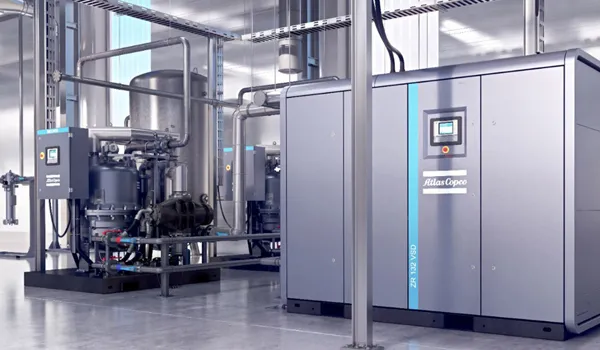
For most buyers, the single most important decision is whether to invest in an oil-injected air compressor or an oil-free air compressor.
Every manufacturing facility, workshop, and production line has its own rhythm. The compressed air system you install is the heartbeat that keeps that rhythm steady — and choosing the wrong compressor technology can ripple through your entire operation, raising energy bills, shortening equipment life, and even threatening product quality.
For most buyers, the single most important decision is whether to invest in an oil-injected air compressor or an oil-free air compressor. Both deliver reliable compressed air, but they are engineered for fundamentally different jobs. This guide breaks down how each technology works, the advantages and trade-offs of each, how air purity standards like ISO 8573-1 apply, and how to match a compressor to your industry and application.
The air compressor you select affects far more than how much air you can produce. It influences:
Because every application has unique requirements, the “best” air compressor is rarely a universal answer. It is the one that matches your air quality needs, operating pattern, and total cost of ownership.
Before comparing them, it helps to understand precisely how each type works.
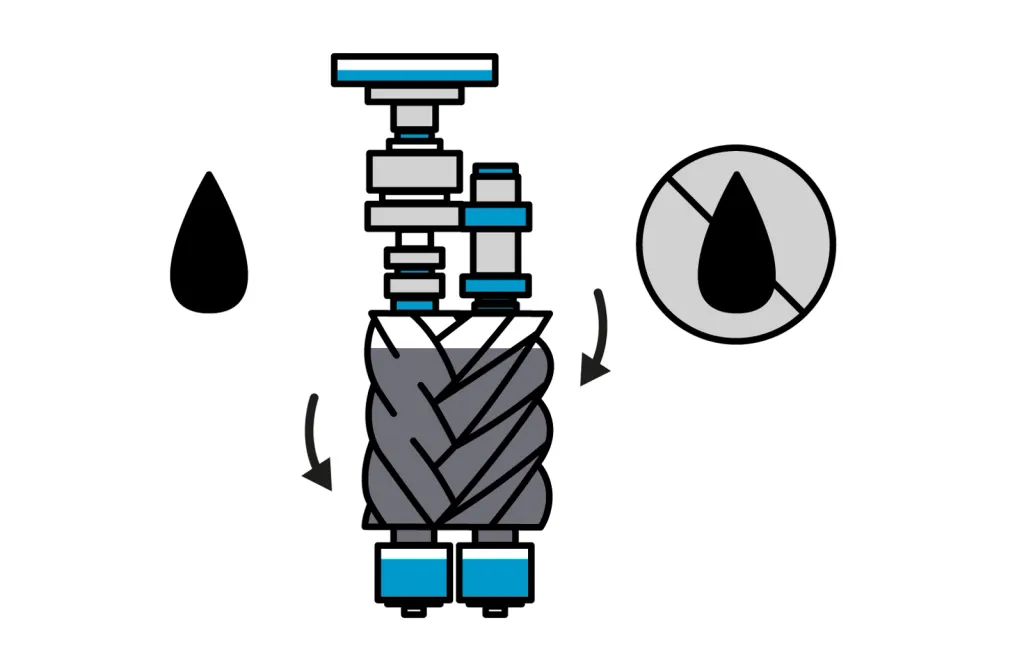
An oil-injected (or oil-lubricated) compressor uses oil inside the compression chamber. In rotary screw designs, oil is injected into the compression element, where it performs several vital jobs at once:
The result is a compact, efficient, and durable machine that can run long hours under demanding conditions. Because oil handles cooling and sealing internally, oil-injected compressors tend to have a simpler design and a lower initial investment.
An oil-free air compressor operates without oil in the compression chamber. To maintain efficiency and minimize wear without oil lubrication, these machines typically use two-stage compression with intercooling and rely on special coatings, materials, and precision tolerances.
It is important to clarify a common misconception: oil-free compressors may still use oil in a separate, sealed gear circuit for lubrication. The key point is that no oil ever enters the compressed air path. This design guarantees clean, contamination-free air and greatly simplifies downstream air treatment.
Oil-injected air compressors are the workhorses of general industry. They are the right choice wherever reliability, consistent performance, and cost control matter most.
For these reasons, oil-injected air compressors are a dependable solution for general manufacturing, metalworking, automotive, and construction sites where air quality requirements are moderate and cost control is a key priority.
Oil-free air compressors are purpose-built for applications where air purity directly affects product quality, safety, or regulatory compliance.
These characteristics make oil-free compressors the preferred choice for the food and beverage, pharmaceutical, medical, and electronics sectors, where clean air is critical for product integrity and safety.
| Feature | Oil-Injected Air Compressor | Oil-Free Air Compressor |
|---|---|---|
| Lubrication | Oil used in the compression chamber | No oil in the compression process |
| Cooling | Oil acts as coolant and sealant | Air- or water-cooled |
| Maximum air purity | Up to ISO 8573-1 Class 1 with filtration | Class 0 (100% oil-free) |
| Typical applications | General manufacturing, automotive, construction | Food, pharmaceuticals, electronics, medical |
| Initial investment | Lower | Higher |
| Maintenance | Regular oil and separator changes | Fewer oil-related components |
| Risk of oil contamination | Possible if filters fail | None |
Both technologies deliver reliable compressed air. Your choice ultimately depends on the required air quality, the sensitivity of your process, and your total cost of ownership.
Air purity is not a theoretical nicety — it directly affects product integrity, process safety, and compliance. Even a small amount of oil can:
Industries such as food processing, pharmaceuticals, and electronics frequently require absolutely oil-free air to avoid product rejection or safety incidents. Understanding how clean your air needs to be is therefore the first step toward choosing the right compressor.
Air purity is classified according to ISO 8573-1, the global standard that defines concentration limits for particles, water, and oil in compressed air.
ISO 8573-1 defines compressed air purity levels across three contamination categories: particles, water, and oil. Each class indicates how clean the air is and determines the required compressor type and filtration system.
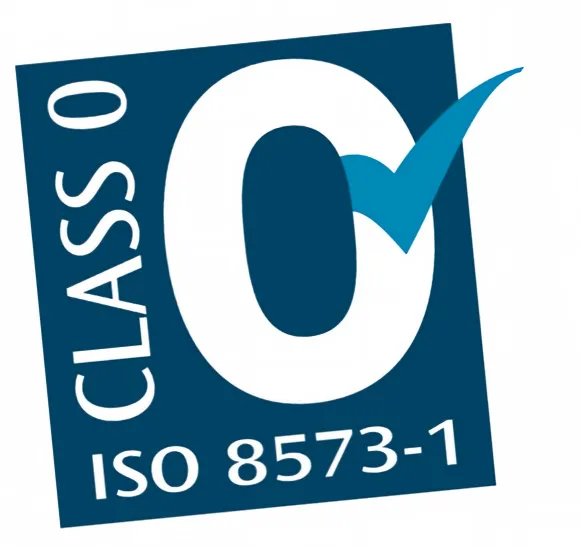
Class 0 is the highest level of air purity. Air compressors certified to Class 0 ensure that no oil enters the compressed air circuit, preventing contamination in the most sensitive applications.
Typical industries:
Class 1 allows up to 0.01 mg/m³ of total oil content, including aerosols, liquid, and vapor. This level can be achieved with oil-injected compressors using advanced filtration, but it is not equivalent to Class 0.
Typical industries:
The distinction between “technically oil-free” (Class 1) and “truly oil-free” (Class 0) is one of the most common sources of confusion — and getting it wrong can have real consequences for regulated products.
If you are uncertain about the required purity class, consult a compressed-air specialist. They can evaluate your process, water and particle requirements, and operational constraints to recommend the right technology.
Related article: A Complete Guide to Choose the Right Air Compressor Type
It is tempting to compare compressors on sticker price alone, but the smarter metric is total cost of ownership (TCO) over the equipment’s life. Consider:
An oil-free air compressor generally carries a higher initial purchase cost due to specialized cooling methods and design. However, for applications demanding Class 0 air, the cost of contamination is usually far higher than any equipment premium. Run the numbers across a five- to ten-year horizon before making a decision.
What does ISO 8573-1 Class 0 certification mean?
Class 0 is the highest air purity rating, guaranteeing 100% oil-free compressed air with no oil contamination — aerosol, liquid, or vapor — in the delivered air.
What is “technically oil-free” air?
“Technically oil-free” refers to ISO Class 1 purity, which allows oil concentration up to 0.01 mg/m³. It is typically achieved using oil-injected compressors with advanced filtration, but it is not the same as true oil-free compression.
Are oil-free compressors more expensive than oil-injected ones?
Yes, oil-free air compressors typically have higher initial purchase costs due to specialized cooling methods and design. Service and maintenance costs can also be higher because of increased friction in the compression process.
Do I need special filters for oil-injected compressors?
For high air purity requirements, yes. Coalescing filters can remove oil traces down to 0.001 mg/m³, and activated carbon filters provide additional cleaning to achieve ISO Class 1 air purity. Proper filter maintenance is essential.
There is no single “best” air compressor — only the best air compressor for your specific process. Oil-injected compressors offer efficiency, durability, and lower cost for general industrial use. Oil-free compressors deliver certified clean air that is non-negotiable in food, pharma, medical, and electronics applications.
Start by defining your required air purity class, then compare energy efficiency, lifecycle cost, and maintenance requirements. With the right technology in place, your compressed air system will keep your operation running smoothly — and your products, your budget, and your compliance intact.