Product Categories:


Wait, don't go!
Before you leave, we have a special offer just for you!
Get 20% off your next purchase.

Product Categories:
Explore Atlas Copco Air Compressor System
A desiccant air dryer delivers ultra‑dry compressed air, stopping moisture‑driven corrosion, downtime and product defects. Learn how it works, warning signs, selection and maintenance best practices for industrial facilities.
Moisture inside compressed air systems creates far more harm than many plant operators realize. Across variable climates, humid coastal zones and cold inland sites alike, untreated compressed air introduces water vapor into pipelines, tools and production equipment. Corroded piping, clogged control valves, stuck pneumatic tools and scrapped product batches are common outcomes, all triggered by unmanaged moisture in your air lines.
For industries where uptime, compliance and product quality cannot be compromised — including pharmaceutical manufacturing, food and beverage processing, medical facilities and automotive finishing shops — tight moisture control is non‑negotiable. A reliable desiccant air dryer acts as your primary line of defence, delivering stable, ultra‑dry compressed air to maximize equipment service life and consistent output quality. Below are the 7 core reasons this equipment is a part of your compressed air setup.
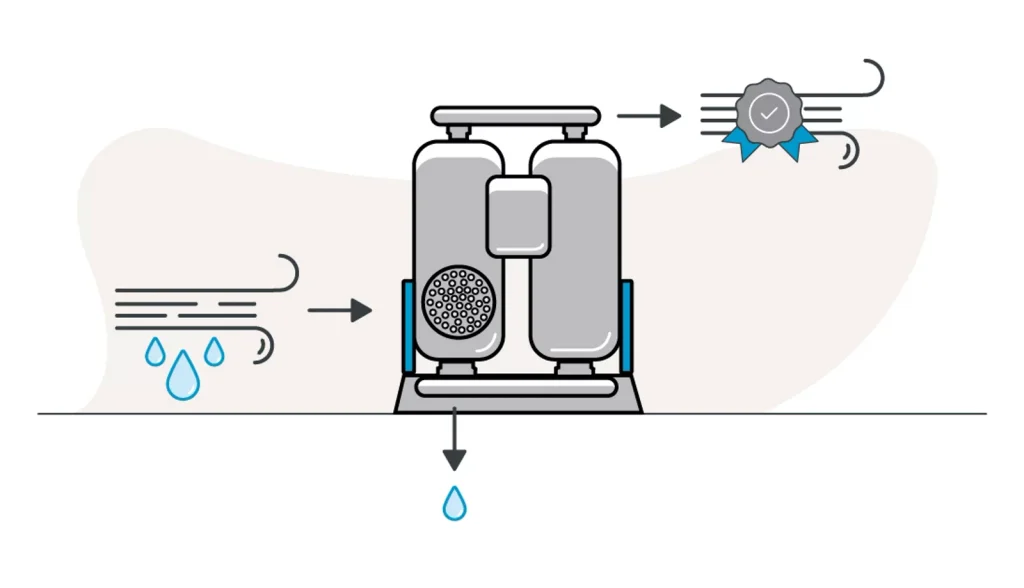
Industrial facilities lose millions of dollars annually to hidden damage caused by water vapor within compressed air systems. When ambient air is compressed, its contained moisture also becomes concentrated. As the compressed stream cools down, vapour condenses into liquid water that accumulates inside air receivers, distribution piping and downstream machinery. In cold operating environments, this condensate speeds up internal metal corrosion and risks line freeze‑ups.
Uncontrolled moisture leads to tangible business losses across sectors:
Each issue translates into extra labour, spoiled raw materials, unplanned maintenance work and dissatisfied customers. Investing in proper air drying eliminates these avoidable operational risks.
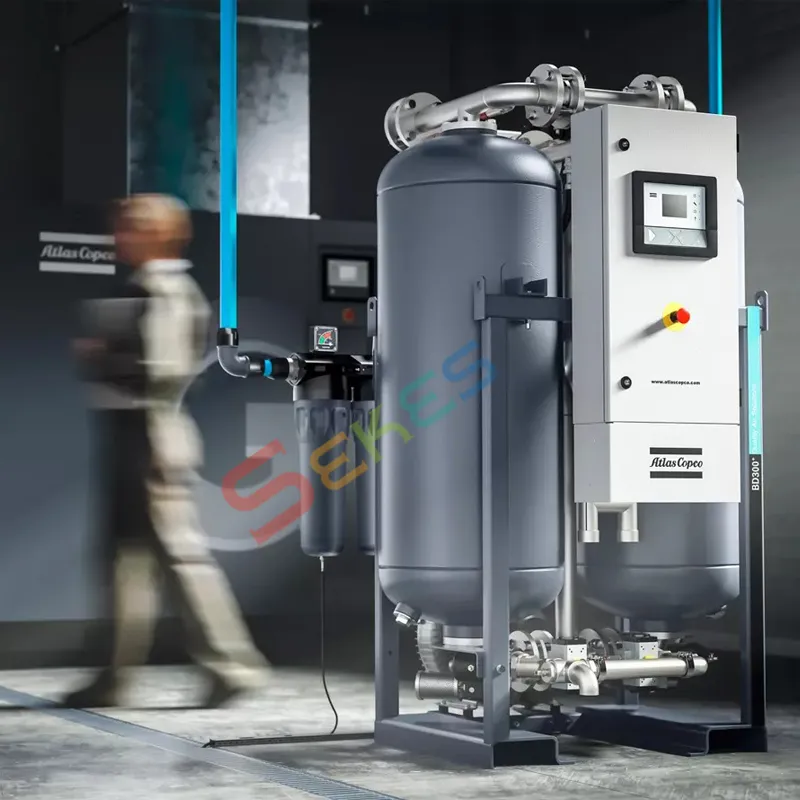
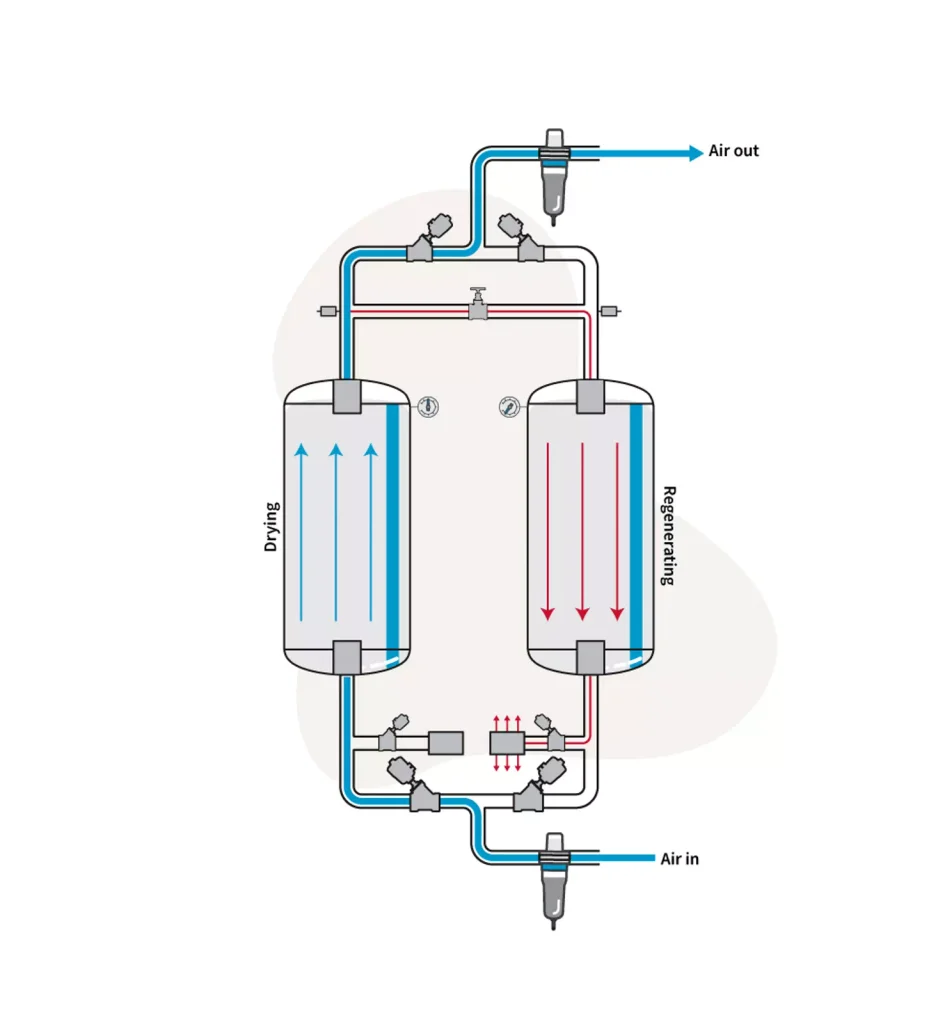
A desiccant air dryer removes water vapour from compressed air through adsorption, forcing process air through pressure vessels (towers) filled with granular desiccant media, most commonly silica gel or activated alumina.
Most industrial units use proven twin‑tower technology following this repeating cycle:
This alternating twin‑tower operation enables non‑stop drying performance. Well‑specified desiccant air dryers reliably achieve ultra‑low dew points of ‑40°F or below, performance levels essential for electronics manufacturing, medical device assembly and other high‑spec industrial workflows where refrigerated dryers cannot deliver sufficient dryness.
Water is the main driver of rust and corrosion inside carbon steel compressed air pipelines. Once corrosion starts, rust particles travel downstream, scratching cylinder seals, blocking small orifices and contaminating end products. A desiccant air dryer maintains air far below the dew point, so condensation never forms on pipe walls. This simple protection extends the service life of your entire air distribution network and cuts replacement costs.
For facilities located in cold climates, residual moisture in compressed air can freeze inside exposed pipes, valves and regulators. Frozen lines stop production abruptly and can crack expensive components. Refrigerated dryers cannot reach low enough dew points to guard against this risk. A properly sized desiccant air dryer delivers ultra‑dry air that stays moisture‑free even at subzero temperatures.
Pneumatic cylinders, air motors, impact wrenches and solenoid valves all rely on clean, dry air. Moisture washes away lubrication, causes internal sticking and accelerates wear. Facilities running wet compressed air see frequent tool breakdowns, higher spare parts spending and unexpected stops. A desiccant air dryer stabilizes air quality and reduces the frequency of tool repair or replacement.
Painting, powder coating, adhesive bonding, packaging and sensitive chemical processes cannot tolerate water contamination. Even tiny amounts of moisture create fisheyes, poor adhesion, blistering and rejected batches. With a desiccant air dryer maintaining a stable low dew point, your process air quality stays consistent day after day, whether humidity is high in summer or low in winter. This reduces rework and scrap rates.
Pharmaceutical, food processing, medical device and electronics manufacturing operate under strict quality rules. Auditors frequently check compressed air purity because air touches products directly. A desiccant air dryer delivers documented low‑dew‑point air that supports compliance, simplifies audits and lowers the chance of fines or production hold orders.
Condensate and rust load up your pre‑filters and coalescing filters quickly. Dirty filters create extra pressure drop, forcing your compressor to work harder and burn more electricity. By removing moisture at the source, a desiccant air dryer keeps downstream filters cleaner for longer, stabilizes system pressure and cuts your compressed air energy bill over time.
Moisture damage often develops slowly and without warning. One day everything runs fine; the next day a stuck valve or burst pipe halts the whole line. Installing a desiccant air dryer removes this hidden variable. When paired with basic monitoring and maintenance, your compressed air system becomes much more reliable, making production scheduling easier and unplanned downtime far less common.
If your plant or workshop experiences any of these symptoms, your existing compressed air drying setup is no longer sufficient:
Purchasing a suitable desiccant air dryer is more than selecting hardware based on price tags. Your unit must align with local climate, workplace air‑quality standards and unique industry operational demands. Keep these core selection criteria top of mind:
Size for peak compressed air demand Your desiccant air dryer must handle your compressor system’s maximum peak flow rate, not only average consumption. Many facilities buy undersized dryers to cut upfront capital costs, only to pay higher long‑term costs through excess maintenance and production interruptions.
Match dew‑point performance to operating conditions High‑humidity southern climates can overwhelm standard refrigerated dryers. Northern locations with freezing ambient temperatures risk residual moisture turning to ice inside exposed pipelines overnight. A desiccant air dryer delivers sufficiently dry air to prevent both condensation and freeze‑related failures for sensitive process equipment.
Prioritize energy efficiency to manage utility spend Electricity costs represent a large share of total compressed air operating expense. Compare regenerative dryer variants that reduce costly compressed air purge losses. Blower‑purge and rotary‑drum style desiccant dryers leverage ambient air plus heating for regeneration instead of wasting treated compressed air, lowering ongoing power bills.
Plan for future production expansion Choose modular desiccant air dryer hardware that scales easily as you add new production lines or ramp‑up output. Avoid letting compressed air treatment capacity become a bottleneck as your facility grows.
Consistent routine maintenance keeps your desiccant air dryer performing reliably and extends its service life. Follow these practical operational guidelines:
Moisture damage often progresses silently but carries steep costs: it shortens equipment lifespan, ruins product batches and generates expensive emergency repairs. For operations prioritizing uptime, product purity and regulatory compliance, a well‑maintained desiccant air dryer functions as operational insurance for trouble‑free compressed air workflows.
If you notice moisture‑related problems in your compressed air system, do not wait for full system breakdown. Schedule a compressed air system audit to identify bottlenecks and match the best‑fit desiccant air dryer solution for your site.
It removes water vapour from compressed air using adsorption. Compressed air passes through towers filled with desiccant beads such as activated alumina or silica gel. The beads capture water molecules to produce low‑dew‑point dry air safe for moisture‑sensitive machinery and processes.
Wet compressed air creates pipe corrosion, valve and tool failure, production shutdown risk and defective finished goods. Dry compressed air keeps equipment running cleaner, more consistently and extends component life.
Heatless dryers use a portion of already‑dried compressed air for desiccant regeneration. Regenerative models apply heat or blowers to regenerate desiccant media with far less purge‑air waste. Both achieve effective moisture removal; the main distinctions are energy consumption and air‑flow architecture.
Rising dew‑point measurements serve as your primary warning indicator. Most systems need fresh desiccant media every 12‑36 months, based on runtime and incoming air moisture levels.
No. The core function of a desiccant air dryer is water‑vapour removal only. Install suitable upstream filters to capture oil mist and particulate contamination, protecting your desiccant bed and preserving dryer performance.
Select a desiccant air dryer whenever you require pressure dew points below ‑20°C, or when piping runs face freezing ambient temperatures. Typical users include electronics, pharmaceutical and food‑packaging sites. Where moisture requirements are less rigorous, refrigerated dryers may prove adequate.
The two vessels alternate tasks: one tower handles active drying, the other runs through its regeneration cycle, then they automatically switch roles. This repeating cycle delivers uninterrupted dry compressed air output.
Every application has different air quality, dew point, and energy demands. We can help you compare technologies and choose the right air dryer for your process.